


Black Salt in Folk Magic: History, Preparation, and Protection Work

Ritual black salt is a contemporary magical material commonly used for symbolic boundaries, banishing, household protection, and the marking of ritual space. It is usually made by combining ordinary salt with a small amount of clean ash, charcoal, soot, or another darkening ingredient.
There is no single universal recipe or uninterrupted historical lineage for “black salt” as it is sold and discussed in modern witchcraft. Salt, ash, charcoal, and protective powders each appear in many folk practices, but those traditions should not be collapsed into one origin story.
Ritual Black Salt Is Not Culinary Black Salt
Ritual black salt should not be confused with food products such as kala namak, Hawaiian black salt, or salt colored for cooking. A magical mixture may contain ash, charcoal, incense residue, herbs, or other ingredients that are not intended for consumption.
Label ritual black salt clearly: NOT FOR FOOD OR INTERNAL USE.
What Black Salt Commonly Contains
A basic modern preparation may include:
- plain sea salt, kosher salt, or another dry salt;
- a very small amount of fully cooled ash from untreated plant material or incense;
- optional powdered charcoal intended for art or ritual use;
- optional dried protective herbs that are already known to be safe to handle.
Do not use ash from plastic, glossy paper, synthetic fabric, pressure-treated wood, painted wood, coal, trash, or unknown materials. Avoid creating airborne dust, and wash your hands after handling the mixture.
Symbolic Meanings
Modern practitioners often interpret the ingredients in the following ways:
- Salt: preservation, cleansing, separation, or boundary-setting;
- Ash: completion, transformation, or the remains of a prior working;
- Charcoal: darkness, containment, absorption symbolism, or concealment;
- Herbs: correspondences chosen from a specific personal or traditional system.
These are ritual meanings, not scientifically proven energetic properties.
Common Uses in Contemporary Practice
Threshold and boundary work
A small amount may be kept in a covered dish near a door, placed inside a sealed charm, or used to mark a temporary ritual boundary. Loose salt on floors can damage surfaces and may be dangerous to pets or children.
Banishing and release
Black salt may be placed in a petition packet, sealed jar, or disposable container as a symbol of separation from an unwanted habit, influence, or situation.
Protective containers
A pinch may be added to a sealed household charm, provided every ingredient is dry and the container is stored safely.
Altar symbolism
A closed container can represent boundaries or protective intent without spreading the material through the room.
How to Use Black Salt at a Threshold Safely
Traditional-looking lines of salt across doorways may create practical problems. Salt can scratch floors, attract moisture, corrode metal, harm plants, and be licked by animals.
Safer options include:
- placing it in a sealed glass vial;
- keeping a covered dish inside the doorway;
- putting it inside a cloth pouch that remains dry;
- drawing a symbolic line on paper and storing the black salt with it;
- using a removable object or plaque as the boundary marker.
How to Store Black Salt
- Use an airtight, clearly labeled container.
- Keep it away from food, spices, medication, and kitchen salt.
- Store it out of reach of children and pets.
- Keep it dry to prevent clumping, corrosion, or mold in added herbs.
- Do not store a mixture containing damp ingredients.
Environmental and Household Safety
Salt can damage soil and plants. Charcoal, ash, oils, glitter, metal, wax, and herbs can contaminate water or create litter. Do not scatter black salt at crossroads, cemeteries, roadsides, rivers, drains, parks, or someone else’s property.
Use the smallest practical amount and contain it whenever possible.
Responsible Disposal
For most modern mixtures, the safest disposal is simple:
- Allow any ash or charcoal to cool completely.
- Seal the material in paper or a small bag.
- Place it in household trash according to local rules.
- Clean and reuse the ritual container when appropriate.
Symbolic closure can be created through words, prayer, tearing a petition, ringing a bell, or cleaning the vessel. Disposal does not need to involve trespassing or environmental release.
Read Proper Disposal of Ritual Remnants for a broader guide.
Black Salt and Practical Protection
A ritual boundary does not replace functioning locks, smoke alarms, outdoor lighting, documentation of threats, legal assistance, medical care, or emergency services. Use the material as a reminder to maintain real-world boundaries.
Common Misconceptions
Black salt is automatically harmful or “dark”
No. Its meaning depends on the practitioner and context.
More black salt creates stronger protection
No. Larger amounts create more mess and environmental risk.
Every folk tradition uses the same black salt recipe
No. Recipes and meanings vary, and many traditions do not use the modern material at all.
Black salt absorbs measurable negative energy
This is a metaphysical belief, not an established scientific fact.
A Simple Contained Protection Practice
- Clean and inspect the physical entrance.
- Check the lock, lighting, and alarms.
- Place a teaspoon or less of black salt in a sealed vial.
- State the boundary the vial represents.
- Store it safely inside the entrance.
- Review both the symbolic and practical boundary periodically.
Continue the Black Salt Series
- How to Make Black Salt for Protection Rituals
- Black Salt vs Sea Salt in Folk Witchcraft
- Using Black Salt for Banishing and Reversal
- Threshold Magic and Boundary Wards
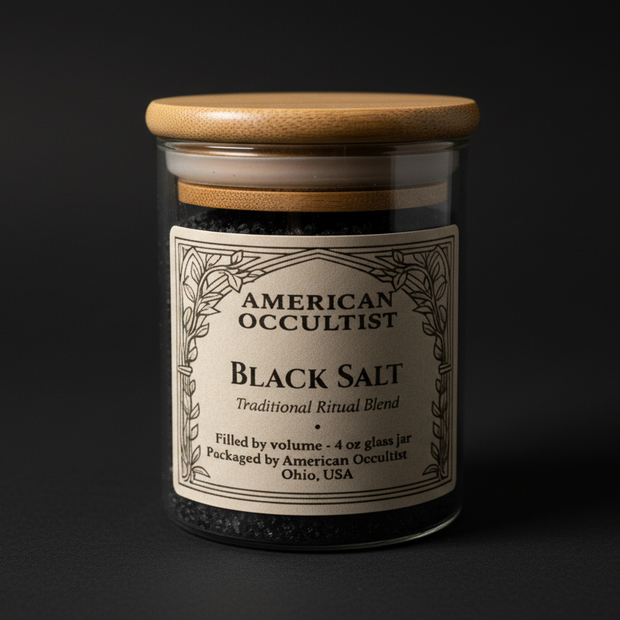
Prepared ritual black salt is also available as Witch’s Black Spellcasting Salt.
Ritual black salt is not edible. Avoid inhaling dust, protect surfaces, and keep salt, ash, charcoal, and herbs away from children, pets, plants, waterways, and food.
Tools for this practice
Explore the products selected for this guide. Review each listing for what is included and how to use it.
Shop this guideHide product


Leave a comment